A Philosophical Primer for those who claim to be religious. As Kierkegaard titled one of his works— Judge for Yourselves!
Here are seven pages1 of something that I didn’t intend to write today, something which rather just manifested itself out of what has so laid fascination upon me for the past few weeks. Really— what I am for some reason thinking about all the time. I must say, this dialogue is quite unsystematic and not nearly as rigorous as I could have made it, for example, where Bruno discusses the origin of Secularity, yet it is something that quite well captures the Spirit of where it seems I am heading.
Where are we heading? If you value Truth, Beauty, & Goodness, please, venture with me & with this rallying cry, tell me what you think. I thank all the dear friends in my life who have pushed me to think and rethink beyond my comfort level.
Religion which Plunges into its very own Depths
Bruno: At the king archon’s court again, are you Clara?
Clara: Only just for some of those oh so lamentable normative duties that are ascribed to me by the passing gusts of bureaucratic obligation. Of course I’d rather be reading. Yet, you know Bruno. This is a world where time marches forward and I’m forced to make these pragmatic decisions in struggling to win the space to labor regarding what I so-far feel called toward contributing to myself and others in this society.
Bruno: Tell me about it— how am I even supposed to make those pragmatic decisions regarding which ‘vocation’ I am limiting myself to do before having the time and space to figure out which vocation is even for me?
Clara: Tis’ the ‘hermeneutic circle’ of life.
Bruno: You know, I’ve always thought that it makes more sense to be a ‘hermeneutic spiral’.
Clara: Have you?
Bruno: Are you kidding? How does it make sense to be a circle? I get that Gadamer or whatever tradition of hermeneutics he emerges from called the process one of the circle, yet isn’t the point that the knowledge regarding something expands in its interaction with such a something and itself? I mean, I get that they were trying to communicate reciprocity– yet, why not articulate this specifically expansive reciprocity as a spiral which is constantly circumscribing more beyond itself?
Clara: If I was unemployed like you maybe I’d know the answer to that.
Bruno: Anyway, among other serendipities, wanna play a game?
Clara: Drop the coy contractions and then we may.
Bruno: Here’s the game: I’m going to ask you what your most fundamental belief is, then I’m gonna incessantly ask you why you hold it.
Clara: Sure. But what prompts the game?
Bruno: Brilliant. I love this game because through putting pressure on our most fundamental beliefs we are opening ourselves up to a whole wealth of just how profoundly true they may just turn out to be. Through this, perhaps we may get better on just precisely those principles that we happen to base the entirety of our one and only lives upon…
Clara: I love that. Where should we begin?
Bruno: Well let’s let the cat out of the bag— do you believe in Christ?
Clara: I do. More than I believe in myself.
B: So then I presume that you believe that Christ is God.
C: Yes.
B: This is to say, in the traditional Christian rendering, that Jesus Christ is God, yet He is also man.
C: I agree with this.
B: Do you believe that Christ is both God and Man (the hypostatic union)2?
C: I do indeed.
B: Calling to mind Arius’ idea that Christ is not God, yet just the first and highest created being by God (ετερόουσιος), I predict you would uphold with Niceaen Christianity that you believe Christ to be, although begotten, not created, and most significantly of one essence with the Father (consubstantial or όμοουσιος).
C: I agree.
B: It is of the utmost fascination to me to think of the other religions which implicitly commit themselves to a structure of conceiving Christ as of a different essence of the Father (heteroousian), and what else are religions doing but some variant of this conceiving, for even in not positing God they are still positing a structure of reality, ein Weltanschauung.
C: Wouldn’t everybody be religious under that view?
B: Absolutely, insofar as we understand religion to just really mean worldview. And in religions which include not only the pre-Christian Judaism, yet also post-Christian Islam, Mormonism, Unitarianism, and, if you will, secular modernity, we may see that each of these religions (barring secular modernity) are unique in that they posit a purely monotheist conception of God, yet deny any kind of hypostatic union.
With this in mind, why do you specifically hold Christ to be of one essence with the Father (homoousianism) as opposed to these other religions which hold Christ to be of a different essence (heteroousianism)? To take this even further, why not believe that Christ is best captured by being similar in essence to the Father (homoiousianism) or even just similar to the Father? (homoism)3?
C: I hold the homoousian Christ because for me, it works. I am best myself, I am best striving toward who I want to be when I am with Jesus as God.
B: Thank you for going along with me so far in this inquiry, and I appreciate your answer, yet I am burning to understand further these questions— 1. What is it specifically about Christ necessarily being homoousian that works for you in contrast to the other interpretations about who Christ may be (heterousianism, etc.), which I am supposing you would say do not work for you? Furthermore, 2. Please make this more intelligible to me: you say that you hold this as your belief because it works for you, yet I am curious, what are the grounds for this criterion of workingness or efficaciousness as the best criterion by which you choose a religion?
C: As to 1., Jesus said of Himself that He is God (I am the Way the Truth & the Life; I and the Father are one, etc.), and the Jews constantly accused Him of comparing Himself to God, so I would say that I believe Christ’s own account of Himself as God.
As to 2., the answer is quite obvious Bruno. We are thrown into this world (Geworfenheit) and immediately confronted by something, a something that perhaps we shouldn’t vaguely gesture toward as Evil, but tentatively rather as chaos. Facticity, or, the intractable conditioning of human life— I need to pee, I need to poop, I am hungry, I want to sleep— these unavoidable facts of my life drive me to make sense of, what at first are weird inarticulable impulses, into somethings which exhibit their own inferential structure (e.g. the concept of needing to sleep for a certain amount of hours continuously in order to rest).
By comprehending the chaos of unconscious impulses into distinctively identifiable phenomena that we are conscious of, we transfigure this chaos into order and we experience some kind of flourishing4. In this way of thinking, religion seems only to be for those dissatisfied ones who think that error exists, and further, that avoiding, overcoming error and crossing the line into some vague notion of flourishing is the goal of life.
B: It is fascinating that you give these reasons for why any of us approach religion at all– for the reason that we want to minimize suffering. This, of course, is the Buddhist cosmology of life. I wonder about what the Christian story has to say regarding how pain and suffering is not an eternal truth that afflicts humanity, yet something that was introduced after the creation of humanity. If suffering and pain is not essential to humanity, this is to imply that there may be a future time where we can totally overcome or transfigure suffering itself. May we compare the cosmology of either religion? May we compare Buddhism’s thesis that suffering is always ever present & avoiding suffering constitutes the ultimate motivation for anything we do with Christianity’s thesis that suffering is possibly not the ultimate motivation and is even eliminable in pursuing the Good? To me this seems to be a comparison which stays at loggerheads unless we plunge deeper into what Religion is5.
So, let me take what you most recently said up instead and revisit such a comparison later: I would like to ask: why do you believe Christ’s authority against Joseph Smith’s, Mohammed’s, or the Unitarians?
C: For the reason that Christ is for some reason better, more trustworthy than the others. Whereas Mohammed is arguably a warlord and Joseph Smith was assassinated by taking the wives of many others, etc. Jesus seems to be the incarnation of (menschwerdung der) ό αγαθος [man-becoming of the Good] itself. This is why I trust Him.
B: I see, and this seems to connect with what you secondly said regarding the facticity of life being the motivation for caring to choose and follow any religious tradition at all. It is quite curious to contrast that the most religious individuals I meet are those who grew up without any religion at all, and conversely, the least religious individuals I meet are those who grew up taking religion, or even just the lasting fruits of religion, for granted6. This irony doesn’t seem to be a mere coincidence, rather, it seems to have to do with the very dynamic in which a deeper alienation from God motivates a deeper unity with God7. As Hölderlin says,
Where the danger grows, also grows the saving power.
[Wo aber Gefahr ist, wächst das Rettende auch].
Do I understand correctly that you take Nicene-Constantinopolitan (homoousian/Athanasian) Christianity specifically to best thus far fulfill our primordial need for security through providing the ultimate accessibility point between the abstract Good and us particular people— through combining both in the single individuality of Christ?
C: Precisely. Yet I myself have some questions now that we have ventured this far— what is it specifically about homoousianism which provides “the ultimate accessibility point” we have in mind here?
B: Brilliant question. It seems that for the reason that we as humans perceive error and we want to move into its opposite: Good, perfection, etc., we began to devise these superstructures with which to provide a coherent transition from error into Good. Perhaps we could understand this transition as the progressive history of developing more and more efficacious processes over whatever continuous period of time with which to internalize Good ways of being over bad ones. These particular processual schemas, as well as the overarching paradigm of a criterion or cosmology by which to justify how these schemas are doing ‘good’, constitutes thus far each and every religion.8
One of the fundamental contradictions that seems to be latent within building these paradigmatic superstructures of religion is that our distinction between the Bad and the Good, grows into a temptation of merely identifying with the Good, and scolding the Bad. The fullest manifestation of this phenomena is known as Pharisaism. It is legalistic, scrupulous, unmerciful, and unhelpful through its unconscious prioritization of its hatred of the Bad. In essence, it dislikes the bad more than it loves the Good; it likes wearing the tall hats more than performing the activity that the tall hats are meant to signify. It also seems to be the essence of naive reactionary tendencies.
Hence in Pharisaism, the formerly circumscribed relations between Bad and Good become incredibly distorted. This profound, higher-order level distortion, itself a latent chaos in the man-made superstructure designed to evade natural chaos in the first place, was then made even more profoundly intelligible by the Good itself incarnating and living in such a world of great distortion— thereby disclosing to us how we are to live if we live in a society of distortion and appearance, which, is inevitably every society.
This incarnation of the Good doubly resolves the Euthyphro dilemma through seeing God and Good as coextensive, rendering unto us the menschwerdung des Gottes [Man-becoming of God]. And it is precisely through the menschwerdung des Gottes that we have the Gottwerdung des Mensches [the man-becoming of God that we have the God-becoming of Man]. St Athanasius captures this in his concept of “θεοσις” [Theosis] through his aphorism, “God became man so that man may become god.”
Hence, that we want to become Good is all the more fully accessible to us for the reason that an entire human individuality (Jesus Christ) has already completed this. Thus He is the most concrete example we can conceive of as well as pragmatically follow, for what is easier to follow than a narrative of the perfect man?
This backdrop then seems to be the grounds for the Truth of Christ’s homoousianism. Homoousianism is itself dependent on how well it gives credence to the overarching point of Christ, insofar as he is making accessible ‘the Good’ and perhaps in this the very goal of Religion to begin with, which we may (pre-)suppose is to bring ourselves closer to the absolute Good— and what better mediation of these two may we conceive of than have these two seemingly opposite concepts unify into a single individuality?
C: At last we’ve reached some bedrock here. Homoousianism as a Christological standpoint then is dependent on perceiving the goal of all Religion to be best achieved by non-dualism, a position which itself emerges in the history of religion. Here then is a higher-order level question: what justifies us preferring this non-dualism to the earlier positions in religion (pantheist, monotheist, shamanist, etc.)? Without such a justification, what stops us, for example, with the Muslims from saying that Christianity immanently led to this secular world, a world which reaps bad fruit, and so Christianity’s fruits are inferior to Islam, a religion which has maintained piety better than Christianity almost everywhere it is practiced?
B: Perhaps here then, we must enter into theories of Truth in general. It is quite ironic that we are getting into theories of Truth because in conceiving of a criterion (or a worldview/religion) by which to choose a particular religion, we are recapitulating again what has just happened to us in the course of this discourse—
C: I’m not sure I understand what you mean.
B: Take it so far with me that through being confronted by chaos we have been led to develop superstructures to reveal the inferential character of chaos and thusly convert it into error which is now intelligible (as opposed to unknown and dangerous). A dynamic like this leads us to acculturate rituals and other pragmatic strategies to habituate avoiding the bad, or even better, strive toward the Good.
C: This is well and dandy.
B: It is then we may ask ourselves, as we consent to some kind of particular superstructure, that we then run into someone who asks us— “why do you afford faith in that religion instead of mine?”. Do you perceive the irony in this?
C: I see now with piercing clarity. With this other person asking the penetrating question of what justifies your particular criterion by and though which you make sense of chaos or reality over my particular criterion, he is asking for the criterion by which you choose your criterion.
B: Indeed. And one is tempted in moments like these to answer with something subjective, an answer that isn’t entirely wrong, yet fails to be valid for the individual who asks such a penetrating question. For by answering in the subjective way, one is merely saying something like ‘by my Christian yardstick (criterion), the other religions fall short’, and the other individual can reply just as easily, ‘from my Buddhist yardstick, the other religions fall short’.
C: Wait! How then may we discern between religions at all? It seems that if each religion already initially implicitly commits itself to a Truth, or atleast, a certain way of addressing certain concerns (concerns against chaos), then discernment between religions becomes much more difficult logically than we usually think.
It would seem to me that we may only genuinely move forward by comprehending further the criterion by which we come to criterions itself. A comparative study in theories of Truth, if you will.
B: This is the stuff that dreams are made of— where Religion qua Religion can no longer merely on the strength of itself be expected to fully account for itself. This brings us inevitably to enter into what Religion has given birth to in trying to articulate conundrums such as these to itself.
C: Do tell, do tell.
B: Well, something like philosophy certainly didn’t just emerge out of nowhere. In a way, it seems to me that it was actually born out of religion.
C: What do you mean? Doesn’t philosophy begin in the Presocratics trying to explain the world without recourse to myth (Thales, etc.)?
B: Certainly, yet it is easy to elude the reasons for why Thales cared at all to begin this. It is said that he is the beginning of philosophy because he was motivated to provide some explanatory structure that was not solely reliant on the popular myths of their day.
C: What do you think motivated him? Dissatisfaction with dogmatism?
B: Well, yes and no. Perhaps Thales took the myths around him seriously enough to think that they would be vindicated by his independent thinking about the world. The Presocratics, and really, the Ancient Vedic philosophers of India before the Presocratics, inaugurated the germinal discourse of plunging further into Religion’s conceptual & inferential structure. In this way, they are not so much as doubting religion, so much as believing it enough as to see if it holds up when we think about the world.
C: Astonishing.
B: And, in following this, it seems to me that Religion itself, if we take any of its particular religions seriously— this is to say, if we truly believe it— leads us to a discourse about itself that is no longer in the realm of what we traditionally call Religion.
At some point this discourse (probably unconsciously) decided to reverse the relationship between the authority of dogma, and the process that led us to a dogma. Perhaps we can even construe this relationship as the most primitive concepts of faith and reason respectively. Faith is a particular commitment that we may be faithful toward, and reason is the capacity to keep on penetrating further into asking which commitments we should have and why.
C: I follow you here, yet actually speaking, how did such an embryo of taking religions seriously arise to become the sort of thing that we are doing here? Plunging into how a particular religion can be ‘better’ than any other?
B: The story of how this germ germinates seems to have its genesis in what may arguably be the religion which implicitly exhausted the explicit conceptual goal of Religion— Christianity. Early Christianity, perceiving itself to be trying to give an account of the recent consummate event of human history, that the eternal God Himself walked among humanity for thirty-three years, then goes on to take great effort in achieving a unity on what all Christians precisely believe. Perhaps this is the origin of the first conceptually complete dogma, a dogma which, so far, has been the most difficult to conceptually improve upon.
This is not to say that this latest dogma— the hypostatic union, the homoousian Christ θεανθροπος [God-man]— unfolds all that it entails immediately; this unfolding is itself an arduous process. So we have the first seven Ecumenical councils spread out over the next 800 years which struggle to articulate the inferential relations of the God-Man.
Further in this (incredibly telegraphic) history, we see a schism occurring between the Western Latin Church and the Eastern Orthodox Church. Specifically in this Western Church, there is something about their ecclesiology which, justifiable or not, leads to a group of people who identify as protestors protesting against what they perceive to be the dogmatic ecclesiology of the Latin Church. So these protestants become Protestants and they use what is accessible to all men, Reason, in discerning how they should organize themselves and their beliefs. And may we say this is a Reason which explicitly comprehends itself as Reason in contrast to the earlier primitive concept of Reason.
It is not too long after this that the generations just after these reformers direct this same energy not just against dogmatic ecclesiology (Luther), and not even just dogmatic conceptions of God (Voltaire), yet the dogmatic positing of God whatsoever (Diderot). As Ivan Kirieevsky says, “[David] Strauss appears just behind Luther”.
This is the religious, specifically Protestant origin of secularity. With secularity, a new dimension of questioning emerges whereby Religion can no longer stand on Theology alone to articulate itself, for Theology presupposes God, and thereby all of the conclusions derived thereof— instead it must appeal to the child of theology, which, instead of articulating religion to those who are still hold themselves to be religious, must through philosophy articulate its most fundamental concepts to those who do not consider themselves religious at all. It is here we see that first germs of the Presocratic and Vedic enterprise becomes a very public enterprise, one which enters public life in the French Revolution.
Hence, Religion itself through its pinnacle conceptual determination of Christianity, the (final?) religion which, in so rigorously trying to articulate itself to itself, immanently leads itself to asking of itself the most fundamental question of all— asking ourselves how we came to the criterion by which we choose a particular criterion— comparative theories of Truth.
C: What a grand tale of the story of coming to self-consciousness of all that we already have always taken for granted, the story of the realization of freedom!
B: Indeed. And a conception of Freedom as inaugurated by Rousseau specifically– as the auto-nomos– willingly and self-consciously binding oneself to certain laws for certain reasons.
C: I see! And so in this picture, freedom is not only dogmatically defined as ‘freedom from sin’ or even ‘freedom to be more as God’, yet less presuppositionally it is freedom to self-consciously and self-motivatedly pursue whatever we find worthy of pursuing— in a word, the Good. How sorrowful it is that freedom in our world—freedom to have unlimited consumer access to all goods for a cheap price, freedom from discomfort, etc.— is the kind of freedom that is prioritized over freedom to become self-conscious of oneself and others, of further pursuing the Good!
B: Let us then provide precisely what we need, pursuing this Good through a kind of comparative study in theories of Truth.
C: Wait a second, I’m getting a call from my lab.
Minutes of Clara enmeshed in a phone call, eyes glazed over, elapse
C: Well… I’m late for my 2pm task of bouncing sound waves through a PVC flute… We’ll have to cut this short Bruno!
Clara exeunt
Bruno: ‘For we, which now behold these present days,
Have eyes to wonder, but lack tongues to praise...’
Bruno exeunt
These revels to be continued in the next Odyssey: Plato, Aristotle… Leibniz’s comments on what we need to do truly know something, then how Kant fulfills this (mere coherence theories of truths e.g. Monadologies, are not enough), then how Hegel creates a coherence theory which demands of itself to make sense of all other coherence theories… Schelling… Karl Popper… Sellars, Brandom, Mcgrath… &c
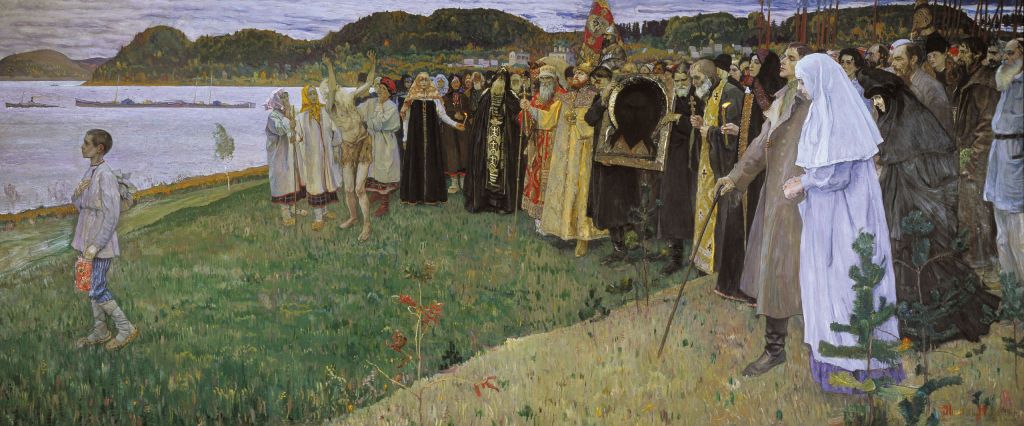
- After thinking and re-thinking, much more now than seven pages presents itself. My thanks be with all.
↩︎ - One may call to mind here a brilliant point of if the hypostatic union is transgressing Aristotle’s law of non-contradiction. Perhaps this is the case. Most Christian defenses I have seen augment the concepts of God and Man such that they are not contradictory… May we venture to the heart of this in the next Act.
↩︎ - In the early church, even after the first anti-Arian Ecumenical council of Nicaea (325), we see with the council of 360 much of the Church (including signees such as even Emperor Constantinus II and the Pope at the time) signing on to a homoian belief regarding who Christ was- that is, that Christ was only similar (homoi) to the Father.
The reasoning for this council’s verdict was because the Bible never mentioned Christ being of the same essence with the Father (homoousianism), let alone did the Bible mention that Christ was the same in any regard with the Father. Rather, these signees were only willingly to say (contrary to St. Athanasius years before) that Christ is at most similar to (hoimoianism in Greek) the Father…
It was against this backdrop that the young St. Basil would rigorously argue for both the use of the philosophical concept of Ousia (from Aristotle’s metaphysics) with which to definitively say that Christ was ‘homo-ousian’ (of one essence with) the Father… Johannes Zachhuber has written an incredible book covering a scene like this and much else titled “The Rise of Christian Theology and End of Ancient Metaphysics”.
↩︎ - With this in mind, it is fascinating to note the similarity between the words: ‘demon’ & ‘dynamic’
↩︎ - This contrast between Buddhism and Christianity’s cosmology I take from the first two of Buddhism’s Four Noble Truths and Colossians 1:16, Romans 5:15 respectively.
↩︎ - How many we may meet who scorn religion, yet call themselves admirers and even spouses to others who grew up in profound religious formation. How many scorn Christianity who know not that they are scorning the first and most successful struggle on this Earth to emancipate women, to dignify the individual person against caste systems, to elevate unqualified love, and with Luther, to practice the giving and taking of reasons! As McGrath writes in Political Eschatology, “It might be the hallmark of the modern to forget the extent to which we owe to the past what we regard as expressive of our unique perspective” .
↩︎ - Perhaps this is why Christ goes at such lengths to try and communicate to us: you must love me more than your father and mother, you must be willing to abandon everything to be my disciple— for through amassing too much comfort, we risk losing our edge, letting our precious oil run out before the Bridegroom returns at midnight.
↩︎ - A thought may emerge here, or much earlier in this essay, of why I am writing about Religion and religions as “man-made”, in comparison to how religions usually speak about themselves as being ‘ The Revelation’ from above (with the beautiful exceptions of self-admittedly “man-made” religions, e.g. Buddhism, Stoicism, Epicureanism, etc).
Indeed, it would seem that writing about religion as man-made undermines their legitimacy as revelations from on high. Yet I offer the idea that just because something arose contingently, that is, was created by Man, doesn’t undermine the sense in which such an idea is true. This is to say that Religion is an enterprise not dissimilar to physics— we are not merely fabricating, but discovering more and more how everything has always been all along. Just as the ‘hypostatic union’ has always been the consummate logical conception of the God which overcomes dualism, Newton’s laws of motion have always been ‘true’ even before he discovered them. In this way, this essay stands continuous with the tradition of thinking about Religion as in Hegel.
With this in mind, I also must say that this essay stands continuous with the tradition of Schelling (though there is some evidence that Hegel wrote something similar) regarding a specific exception, one which eludes human descrying. If it conceptually holds up, the incarnation itself— the greatest contradiction between God & Man is a contradiction which may only be resolved by the great God Himself [“der großer Gott selbst”].
↩︎
 Threshing Floor