

For Brian
This painting I dedicate to the only virtue not encompassed in the classical world, yet one used by Christ to exemplify the last (and perhaps greatest) virtue: humility. “Whoever humbles himself like [a] child, he is the greatest in the kingdom of heaven.” – To our spiritual role models.
John Green captures such an intimate dimension of reality. I remember being eleven years old and seeing a ‘The Fault in Our Stars” trailer on tv. “That’s what teenage life is like?!?” Though I’ve never seen it, “Paper Towns” felt like a sacrament towards the intoxicating mystery of love, a love that was so flawlessly pure. I was similarly fascinated by Katy Perry’s “Teenage Dream” as a preteen, all these constituting this multifaceted mystery of life, with hidden more deeply than any other, the great mystery of love. I must have you know, growing up without any religious background rendered me hyper-sensitive to any traces of the divine, which I found all throughout these songs and films of love.
Like anyone else during COVID, I would dance to Richard Wagner’s Siegfried in my underwear for hours on end, all while imagining each scene, upwelling with immense inspiration. That was when from this purely secular background, I gradually emerged as obsessed with a certain sentimental craving I could only call ‘The Divine’. No wonder then was I drawn to Wagner, who purposely modeled his operas to be quasi-religious experiences, engaging every sense. For me they were a kind of church before I ever had the chance to set foot in one.
My sensitivity has still not left me. For many reasons, I began to articulate this sensitivity as a 14-year old starting my first journal where I would, like anyone else, externalize my anger by ranting. Slowly though, my journal entries began to reflect calmer waters, thoughts about life, the world it takes place in, the people in it, but more than anything, the irreducible ‘I’, myself. By reflecting on my own thought patterns, I began to recognize the same within others.
“Until you make the unconscious conscious, it will direct your life and you will call it fate” – C.G. Jung
“There arises thus a certain insincerity in our philosophic discussions: the potentest of all our premises is never mentioned.” – William James
We all suffer from something, make mistakes, say the wrong thing, in a religious vocabulary— sin. Here’s the the primordial question, a question that a hundred schools of thought, a hundred religions have risen from the dust in attempts to figure out – why? Why do we yell at the one we say we love? Why are we so easily irritated by them? Why is anger, irritation, fear, all of it, so quick to arise in the mind? Why do we feel uneasy around some people, withholding certain things? When we argue with others, intellectually or otherwise, why do we become so emotionally committed to the outcome of arguments?
I believe the root of all these afflictions not to be so simply, evil, nor other reified metaphysical forces, rather, I think it is the defensive measures unconsciously taken by a deeply wounded part of ourselves, who is really trying to protect us or warn us. Perhaps this is why when you have an ‘evil’ thought, you mustn’t whip yourself, but rather ask yourself, where is this coming from within me?
Indeed, to lash out is an act of love, only, misdirected. Hence why we have the capacity to get upset at those we love most. Sometimes we continually mistreat loved ones, indicative of a deeper wound, from which we are consequently unconsciously primed to react in defensive ways in order to defend ourselves. A feedback loop quickly arises, where an otherwise well-adjusted individual finds themselves one day an emotional wreck. You find yourself after the long stretch of many years, How did my life become like this?
With those you care most about, you spend time with them, speak to them, eat with them. But often overlooked is the most important relationship, the person to whom everyone you interact with, is with— how is your relationship with yourself? When do you spend time with yourself?
As I have spent more time on this Earth, going throughout the world, meeting all the beautiful souls I have, the more I become acquainted with the trauma these people suffer from, and most of all, recognizing within them what is really my own trauma. It is ubiquitous. Now trauma is a strong word, yet it doesn’t just have to be this singular bombastic event so much as a series of small interactions that build up. I find that it is this subtle long-term induced trauma that is most dangerous, as life shall always take the path of least resistance, the default habits.
Just as a physician might say there is nobody who is perfectly healthy, so is there nobody free from trauma. I find that through the course of life, we begin with this innocent trust, a vulnerability, which is betrayed by a negative comment, experience, that immediately sends up the signal: guard yourself. Note that it is not the friendly try and do this for this x reason, a helpful guide on an important journey, but rather it is framed negatively, and usually without qualification (an attitude termed abstract negation by Hegel), you believe x? That’s retarded.
That’s what all conflict comes down to. Fear of being vulnerable with another— and so you put your guard up, you speak with more conviction, you assert yourself more to show you are not afraid, but internally the entire locus is fear. The goal in conflict is to delegitimize the other. One may do this rationally, recalling tallies of wrongdoing & woe, victimizing oneself, one may do this emotionally, belittling the other out-loud or internally, They’re just stupid.
Another more covert possibility may occur out of fear of getting belittled further where you put on a mask, you cover up how you really feel or want to be, and worse yet, leaving those feelings of who you want to be to the wayside, you repress key elements of yourself. It is one thing to be corrected and understand why, yet altogether an entirely other thing to repress something out of fear. The layers upon layers of masks that can accumulate during life through this unconscious force is astonishing. Yet no matter the severity, all these masks may be washed away in the beautiful catharsis of love; loving yourself.
The fear of being vulnerable with another (i.e. insecurity) as itself the consequence of a past trauma, is then heartbreaking to witness as a fear manifesting as anger. It is no surprise then, seeing anger to only be returned by more anger. Every ‘rude’ person you encounter is really someone who was or is wounded. Every lashing out is really a cry for help, every scorn a projection of the self-image. There is only one way to properly respond to these things – pure transparency, beginning most of all with yourself.
The most mature act on this Earth consists in being honest with yourself. What an utterly difficult disposition to have, especially during the heat of the moment, when the guard signals are flashing red. To be sure though, is it in these tense moments where, if you allow yourself, you may learn most about yourself. After all, to be vulnerable, to be honest with oneself is a radical thing, and a sure sign that one loves oneself. Such self-honesty seems to be so vital in maintaining one’s reality, that it is also evident in the historical unfolding of the various ways in which we have tried to understand ourselves & the world around us, i.e. the history of religion as recapitulating the attempt to make self-honesty as pragmatically easy as possible, especially in the heat of the moment.
Fr. Zossima in The Brothers Karamazov puts it well in an exhortation—
“And, above all–don’t lie. Above all, don’t lie to yourself. The man who lies to himself and listens to his own lie comes to such a pass that he cannot distinguish the truth within him, or around him, and so loses all respect for himself and for others. And having no respect he ceases to love, and in order to occupy and distract himself without love he gives way to passions and coarse pleasures, and sinks to bestiality in his vices, all from continual lying to other men and to himself. The man who lies to himself can be more easily offended than anyone. You know it is sometimes very pleasant to take offence, isn’t it? A man may know that nobody has insulted him, but that he has invented the insult for himself, has lied and exaggerated to make it picturesque, has caught at a word and made a mountain out of a molehill–he knows that himself, yet he will be the first to take offence, and will revel in his resentment till he feels great pleasure in it, and so pass to genuine vindictiveness. But get up, sit down, I beg you. All this, too, is deceitful posturing.“
If you have a partner who continually lies to you, then you cannot trust them to tell you reality. If you cannot trust someone to give you reality, then what in the world are you doing around them? Perhaps, it sounds banal, yet if someone so close to you as a partner fails even occasionally to give you reality, can you at least trust yourself to give you reality? Do you have a relationship with yourself such that you trust yourself?
All of these questions are best approached with healing. The process of healing is different for everybody. Foremost, healing is beginning a kind of radical acceptance towards reality. Hatred, and the rest of its family like irritation, results from a difference, a discrepancy between one’s idea or desire of something, and the reality of that something which confronts you. I would argue (unlike e.g. Buddhism) that this discrepancy itself is not inherently evil, yet rather that one’s reaction to this discrepancy can and often is.
When one sees this discrepancy they have two options: either they may take it as an offense, my will is not done, priming all the defensive equipment of the psyche, or they may recognize the reality before them, thy will be done, validate their internal reaction as well as its origin within oneself, make a mental bookmark, and at an ideal later time, perhaps a brief daily contemplation before bed, explore where such feelings may have come from in oneself, all with charity, forgiveness, and understanding. In a beautiful irony, this method is more efficacious at what the first method desires!
Through this mindfulness, being aware of how each action and reaction makes us feel, the masks that we have built up slowly begin to dissolve in love, in self-understanding. Truly, we only hate, we only act with annoyance towards that which we do not truly know or misunderstand. And how misunderstood and immediately misdirected are our very own emotions!
How you speak to yourself is a significant determinant in your capacity to love, of how you treat yourself and others. I used to think mental health was illusory, that we could simply will ourselves to be better through force. Seeing the deeper and more enduring physiological basis of trauma, I am convinced now that it is best approached by this more patient and mindful process.
Healing is the capacity to say to oneself, “I accept what you are feeling, I am jealous, annoyed, impatient, etc. perhaps for fully justified reasons, and yes, I would like to lash out with a subtle snarky comment, a full blown unflattering breakdown of another, yet this shall only bring their guard up, break down the ability to communicate, to love. I should, with the honesty that any friendship, relationship with another entails, express these honest feelings, these feelings which are neither right or wrong but simply the truth of how I feel to them when it is easiest for them to receive it. I shall not force or even expect them to change, but I cannot force myself to be in just any relationship either. One possibility or the other may happen, and throughout it, I will be with you. It is ok, I will take care of you.”
So much of life can be, out of fear from others, hiding parts of yourself from yourself, with all of our repressions relegating themselves as a shadow. The most radical thing to be done is to love your shadow, to fully accept it as a part of yourself. It is already implicitly a part of yourself, and facing it as a reality that must be considered, explicitly treats it as such. This is the sense in which one doesn’t have to do anything except let go of the excess illusions.
This is why religion, when properly grasped, shouldn’t be so much of an enchantment of the reality than it is trying to accept reality simply how reality is. This is why in Orthodox Christianity one central prayer follows as— Lord Jesus Christ, Son of God, have mercy on me the sinner. To accept oneself as liable to sin or mistakes makes it easier to admit to oneself in the heat of the moment that one should slow down, reconsider their course of action. If life is so informed by our habits and the history of religion is the gradual succession of better, more pragmatic habits becoming more widely accessible to all individuals, then I owe an immense amount to this religion, this prayer. Thank you Lord.
I have a parable to share. Imagine the two people who are the most opposed to one another; come with me dear reader and take Alex Jones and Anderson Cooper. One day I believe they will be sitting at a table alone, where Alex will begin, “You know what? I’ve been starting to see myself from your perspective recently, and I have something to admit- I’m a sinner, can you please forgive me?“, “Hohoh“, Anderson Cooper will chortle back, “You know what? I’ve looked at myself from your perspective. Can you forgive me?“. The world may only be healed through this kind of mutual confession of the shadow. This is how I believe the world shall end.
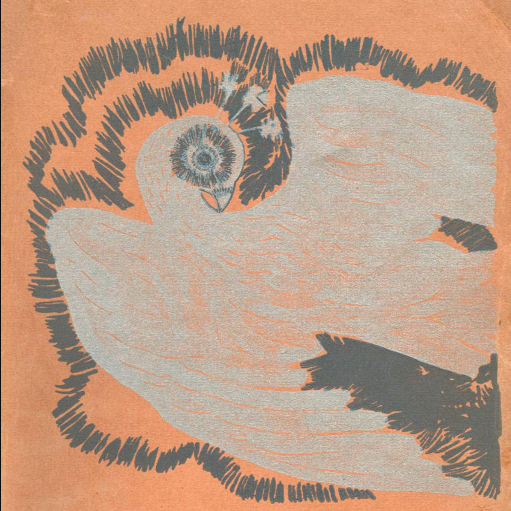
& I thank you dear reader, and wish to leave you with one question that was put to me by a dear and beloved friend many moons ago that has helped me, well, to heal: what is your relationship with yourself like? I for one painted the most wonderful inner expression (Innerer Klang as Kandinsky calls it) of my heart recently and continue to draw abundant rejuvenation from it as part of a growing quest of knowing myself.
All of Life takes place in and through emotion. The better relationship you have with yourself, your emotions, the more intimate you become with Life, and the people in your life.
Christ, you were born on this day as a meek child in order to show just how true this all really was. I am fascinated by this all as how we act is really all we are. And,
“Truly, it is more blessed to give than to receive.”
…
“That I feed the beggar, that I forgive an insult, that I love my enemy in the name of Christ—all these are undoubtedly great virtues. What I do unto the least of my brethren, that I do unto Christ.
But what if I should discover that the least amongst them all, the poorest of all beggars, the most impudent of all offenders, yea the very fiend himself—that these are within me, and that I myself stand in need of the alms of my own kindness, that I myself am the enemy who must be loved—what then?
Then, as a rule, the whole truth of Christianity is reversed. There is then no more talk of love and long suffering. We say to the brother within us: ‘Raca‘, and condemn and rage against ourselves.
We hide him from the world, we deny ever having met this least among the lowly in ourselves, and had it been God himself who drew near to us in this despicable form, we should have denied him a thousand times before a single cock had crowed.” – C.G. Jung
 Threshing Floor
wow!! 6The Pilgrimage of Reason (2/3)
LikeLike